
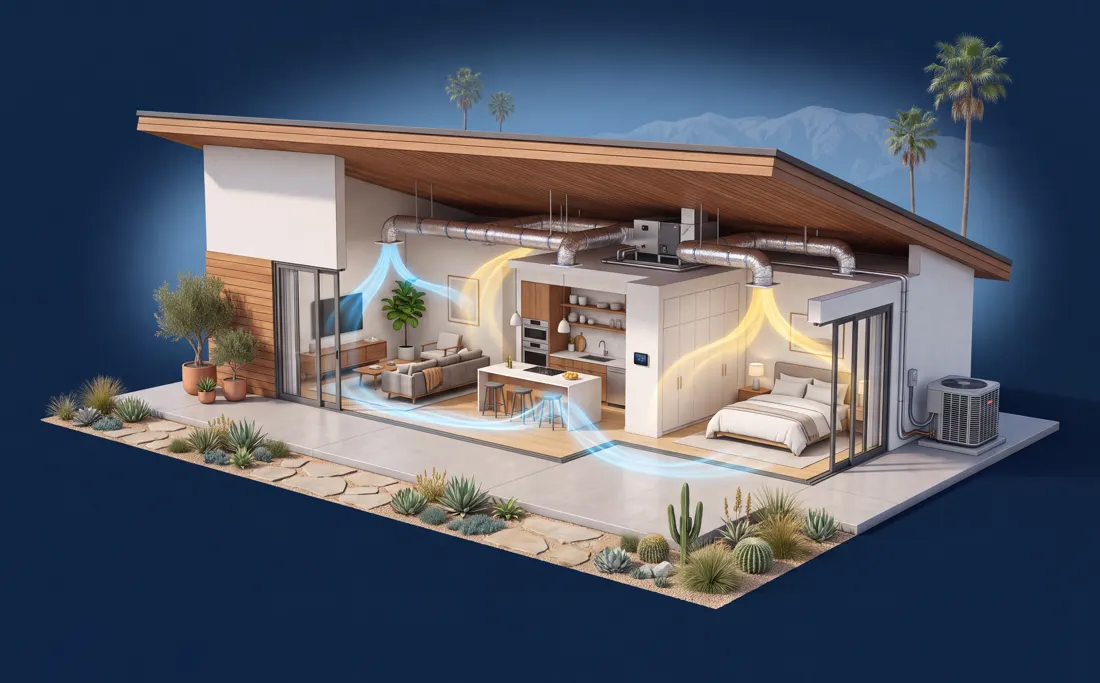
 Same-day AC repair
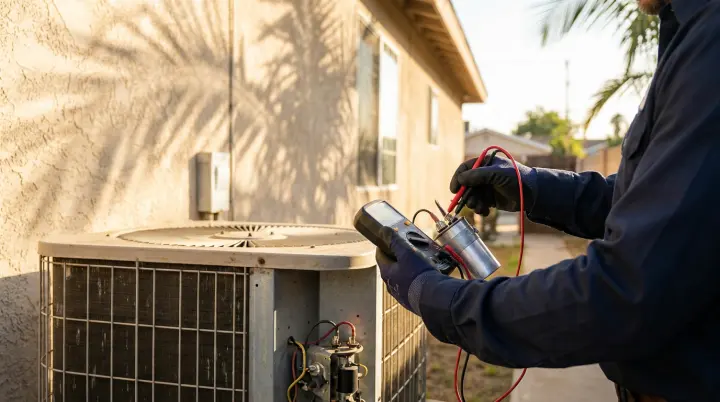
Weak capacitors
Capacitors lose capacity before they fail.
Book a techFast zone, up to 10 miles
10 to 20 miles
Flat prices
2026 heat pump rebates
Federal 25C credit ended in 2025. Utility rebates still pay.
Open 7 AM-9 PM every day. Emergencies 24/7. CSLB license #1148919.
A $129 tune-up in Burbank in a two-hour window you pick, on time or $50 off.
What we catch early
Capacitors lose capacity before they fail.
Book a techDust, pollen and wildfire ash coat outdoor coils and raise head pressure, power use and the risk of compressor failure.
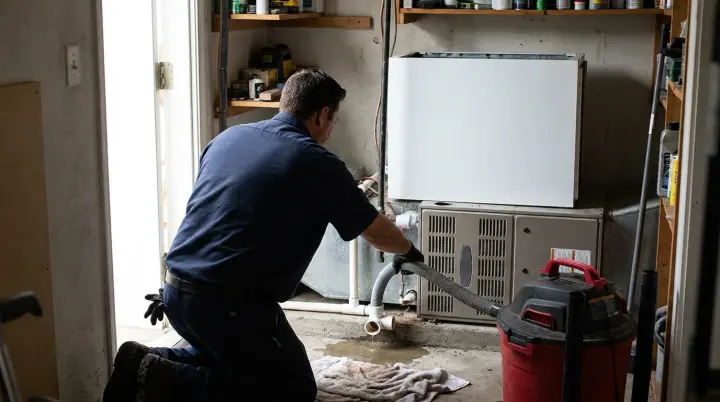
Book a techAlgae in the drain line causes most indoor water leaks from attic units.
Book a techA dirty flame sensor, a weak igniter or a cracked heat exchanger.
Book a techHow it works
Pick a two-hour window. Spring for cooling, fall for heating.
A text with your tech's name, photo and arrival time. No waiting by the door.
Coils cleaned, drain flushed, electrical parts and refrigerant charge tested.
Photos and readings by email, and a reminder before next season.
Upfront pricing
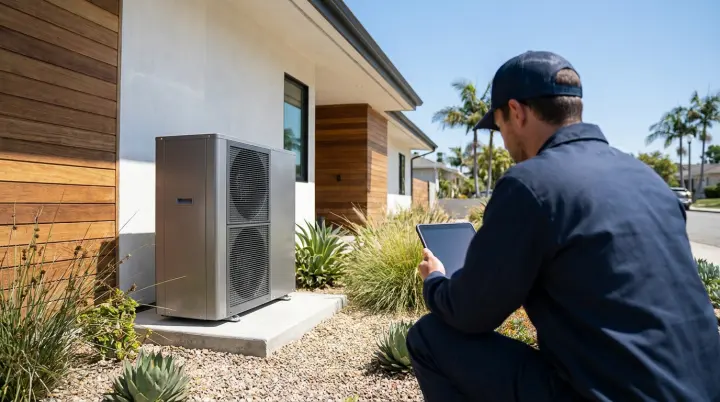
Flat prices, posted here. Your tech confirms the final number on a tablet, and nothing starts until you approve it.
| AC or furnace tune-upPer system, per visit | $129 |
|---|---|
| Maintenance planTwo visits a year, priority windows, 15% off repairs | $15/month |
| Extra system on the same planSecond unit or mini-split zone | Discounted |
| MERV 13 filter upgrade | Quoted on site |
Same flat prices across our service area, Burbank included.
Our guarantees
If we miss your arrival window, the discount is applied automatically.
You approve a flat price before any work begins. No hourly surprises.
Same problem within 90 days means a free return visit.
On every repair and install, on top of the manufacturer's parts warranty.
CSLB license #1148919. Verify it on cslb.ca.gov
FAQ
Something else on your mind? Call (818) 351-1443 and a real person picks up.
Burbank is our home base, so most calls here are reached in 30 to 50 minutes.
A few weeks before the first 90°F day, which at Burbank Valley Pump Plant typically arrives around March 26.
$15 a month for a spring and a fall visit, priority windows and 15% off repairs. A single tune-up is $129.
Yes, including Magnolia Park, the Rancho Equestrian District, Burbank Hills and the rest of Burbank (ZIP codes 91501, 91502, 91504, 91505 and 91506).

An AC or furnace tune-up in Burbank is $129, or $15 a month on a plan with two visits a year. Book the cooling visit before the first 90°F day, which near Burbank typically comes around March 26.
Burbank systems face a long dry season, with ash from the hills and dust from the flats. Cooling season also starts early here. A spring visit focuses on the outdoor coil, which we clean from the inside out so dirt is not pushed deeper into the fins. The condensate line gets flushed too, because it dries out in winter and clogs once the AC runs hard. We test the capacitor against its rated value, since weak ones tend to fail in the first hot week. Rancho homes near horse lots get an extra look at the coil and the filter.
The fall visit is about gas safety. Many Burbank homes still run an older furnace in a hallway closet or attic, and a few still have floor furnaces. We test for carbon monoxide at the supply registers and inspect the heat exchanger and flue. We also make sure the closet door lets in enough combustion air. If you have a heat pump instead, the fall visit checks the reversing valve and defrost controls. Either way you get photos of what we found.
Hillside homes above Glenoaks get a closer look at the outdoor unit after fire season, since ash and leaves pile up on terraces. Homes near the airport and the freeways collect fine dust on coils faster than quieter streets. We note each part's condition and age, so you can plan repairs before they fail. Plan members get both visits scheduled at once, with reminders by text.
The system short-cycles on mild days, or the outdoor fan hums without spinning. A musty smell from the registers after the first cooling day often means a wet drain pan. Water stains on a hallway ceiling below the attic unit need attention right away.
A Burbank maintenance plan works best on a spring and a fall schedule. The spring visit should happen before the first hot week, while the fall visit comes before the first cold nights. Plan members get reminders by text, so the timing does not depend on remembering. If you rent out a unit, we can send the report to you and the tenant.
Older Burbank homes often have the furnace in a hallway closet or attic and the AC condenser in a side yard. Both need different attention, so the fall visit focuses on burners, venting and carbon monoxide, and the spring visit on coils and electrical parts. Side-yard units near dryer vents collect lint, which we clear on every visit.
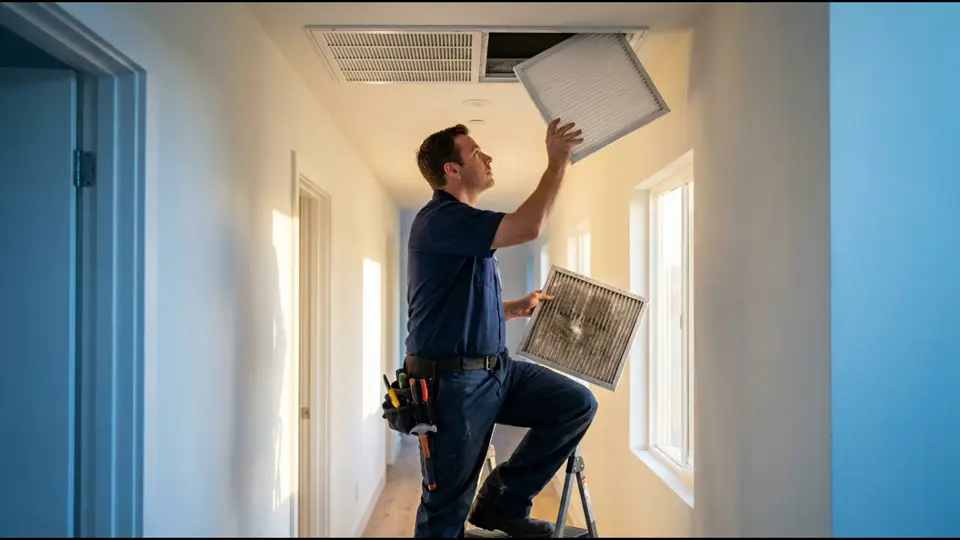
Filters are the easiest thing you can do yourself between visits. Many Burbank systems use a filter grille in the hallway ceiling, which is easy to forget. Checking it monthly during summer and fire season keeps airflow up and the coil clean.
The NOAA weather station 2 miles from Burbank, Burbank Valley Pump Plant, averaged 24 days a year at 95°F or hotter and 6 days at 100°F or hotter in 2016-2025. Its hottest reading was 114°F on September 5, 2020.
At Burbank Valley Pump Plant, the first 90°F day of the year typically arrives around March 26. Book the spring cooling tune-up a few weeks before that, so weak parts are replaced before the system has to work hard.
The same station recorded about 44 nights a year at 40°F or colder, with winter lows averaging 42.5°F. That is cold enough that the furnace runs every night in winter, so the fall heating visit, with its combustion and carbon monoxide check, matters as much as the spring one.
In Burbank (ZIP codes 91501, 91502, 91504, 91505 and 91506), 51% of homes were built before 1960 and 72% before 1980; 72% of households heat with natural gas, and 44% of homes are detached single-family houses.
Updated October 2026.
$129 flat per system, in a two-hour window you pick.